
neurodiversity
DEI strategy
neuro-inclusion
Building a DEI Strategy for 2026 and Beyond

Jess Sandham
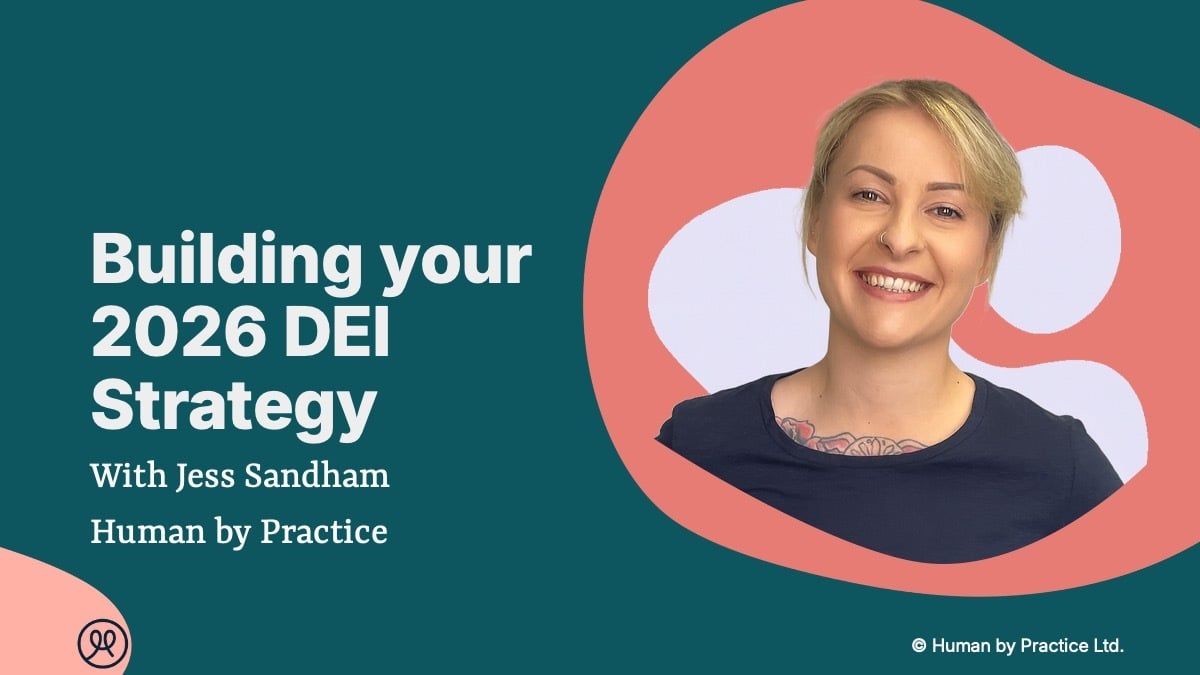
Earlier this week I ran a DEI strategy webinar focused on one question I’m hearing everywhere right now, what does DEI look like going into 2026?
Not in theory. In the real world organisations are operating in now.
2025 has been a year of turbulence and recalibration. Political polarisation moved from background noise to centre stage. Public discourse hardened. Some organisations responded by quietly stepping back from DEI language, restructuring teams, or parking activity altogether. Others doubled down, with more discipline and less noise.
So the question for 2026 is no longer whether DEI matters. It’s how strategies evolve to reflect the world as it actually is, legally, politically, economically, and culturally.
Here are a few of the themes I explored in the session, and the signals organisations should be paying attention to now.
Catch up on the webinar and download the free resource, here (link).
The Legal Landscape Is Raising the Bar, Not Lowering It
Despite the perception of DEI “rollbacks”, the regulatory direction of travel is clear. We’re moving into a period of stronger duties, sharper enforcement, and higher expectations of employers.
This includes:- A growing legal burden around sexual harassment prevention, with “reasonable steps” expected to become “all reasonable steps”.
- Expanded protections for people returning from family leave, including maternity, adoption, shared parental and neonatal care.
- Day-one rights becoming the norm, from sick pay to parental leave to flexible working requests.
- The removal of the two-year qualifying period for unfair dismissal claims.
- Proposed mandatory ethnicity and disability pay gap reporting, alongside extended equal pay claims.
- Increased scrutiny of governance, enforcement, and accountability through a new Fair Work Agency.
At the same time, legal clarification around sex in the Equality Act continues to have a profound and harmful impact on some of the most marginalised people in our society. Organisations are having to navigate fear, confusion, and real human consequences, often without clear operational guidance.
The takeaway for 2026 is simple. Compliance alone will not protect organisations. Preventative, well-governed, human-centred strategies will.
Psychological Safety Is Shifting from “Nice to Have” to Core Infrastructure
Teams are navigating bigger ideological differences than they were even a few years ago. Beliefs around geopolitics, gender, religion and identity are emerging at work, whether leaders feel ready for that or not. The goal is no longer avoiding disagreement. It’s learning how to hold it.
That means:- Clear behavioural expectations.
- Managers with the confidence and skill to facilitate difficult conversations.
- Cultures where challenge doesn’t equal threat.
- Psychological safety that allows people to speak without being shut down, ridiculed, or sidelined.
Hybrid Equity and Neuro-Inclusion Are Exposing Design Flaws
As hybrid work matures, inequities are becoming easier to see.
Neurodivergent colleagues in particular are describing hybrid work as both a liberation and a barrier. Without intentional design, flexibility can amplify exclusion rather than reduce it. It's more important than ever that workplaces are intentional about neuro-inclusion. It benefits everyone, not just neurodivergent people.
But the impact for neurodivergent people is profound.
By 2026, inclusive design of meetings, workloads, communication norms and performance expectations will need to be standard practice.
Data Must Be Used Carefully
The next phase of DEI is more quantitative. Not least to remind us all of its value and the impact inclusion has on the bottom line.
I don't always enjoy talking in terms of the business case, but it is important and even more so now when DEI is under such close scrutiny. Time and again I'm reminded that it's not enough just to make work 'nice' for people - leaders and boards want impact. They want return on investment.
Pay gap reporting, regulatory scrutiny, and AI bias auditing mean organisations are expected to evidence movement, not intention. But data used without context or care quickly becomes a weapon rather than a guide.
What’s working well right now is transparent storytelling. Using data to highlight patterns, invite challenge, and guide decisions, rather than to shame, rank, or perform.
Strategies Are Regaining Momentum by Doing Less, Better
One of the strongest signals from the session was this. The strategies stalling hardest are the ones trying to do everything at once.
What is working:- Fewer, higher-impact priorities.
- Clear ownership beyond the DEI team.
- Manager capability built around real conversations.
- Community groups with genuine decision-making power.
- Governance that’s visible and taken seriously.
- Language that is human - it invites people in, rather than shuts them out of the conversation.
The organisations regaining momentum are connecting their DEI strategy to purpose, risk, performance, customer experience and retention, and letting go of outdated narratives.
Looking Ahead
Going into 2026 and beyond, I expect to see:
- Greater focus on AI governance and bias detection.
- Stronger protections around sexual harassment, including third-party interactions.
- Neuro-inclusion embedded into everyday ways of working.
- A shift from community groups as social spaces to community-led decision-making models.
The strategies that hold will be the ones designed for reality. Human, measurable, focused, and owned by leaders at every level. If there’s one message I left people with, it’s this: a DEI strategy only works when people recognise themselves in it. This means listening, co-creating, holding space for feedback.
You can find more thinking like this in my newsletter, or explore upcoming sessions at humanbypractice.co.uk.
